


Why choose us
One-Stop Solution
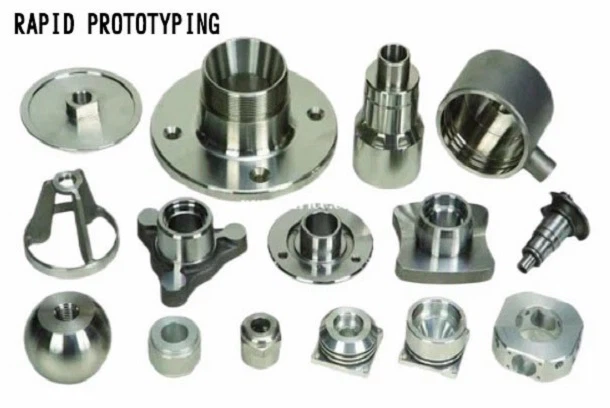
We offer one-stop manufacturing solutions covering CNC machining, 3D printing, sheet metal fabrication, mold making, and a wide range of material options and surface treatment solutions, supporting everything from rapid prototyping to on-demand production.
Our Certificate
Our factory management system conforms to GB/T 9001-2015 IDT ISO 9001:2015 standards.
Quality Control and Shipments
We have specialized engineers to examine the quantity, size, assembly, and surface finish. Once they confirm that everything is in order, we will send pictures to our clients for confirmation. After approval, we will arrange international express shipping (DHL, UPS, TNT, EMS, FedEx) with the best packaging.
After-Sale Service
If there are any discrepancies with your requirements, we will refund your money or reproduce the products until you are satisfied, free of charge.
In manufacturing, 3D-printed prototypes are the first physical models of a concept. They’re essentially the baseline manufacturers’ reference before moving on to development. It’s an additive process, meaning a 3D printer builds products from scratch using computer-aided design (CAD) software.
3D-printed prototypes are ideal for custom work, small product batches, trials, proofs-of-concept and high-precision projects. They’re also the go-to for rapid prototyping, where manufacturers quickly create 3D design iterations of a working product to test functionality.
-
![Flexible Black PA12 3D Printing Prototype]() Flexible Black PA12 3D Printing PrototypeWe are one of the best factories of SLA,SLS,SLM 3D Printing Factory in Shenzhen,china.. Printing Material: photosensitive resin,abs,transparent pc,PA12,PA+GF,SST 316 Cocr.. Surface Fininish:
Flexible Black PA12 3D Printing PrototypeWe are one of the best factories of SLA,SLS,SLM 3D Printing Factory in Shenzhen,china.. Printing Material: photosensitive resin,abs,transparent pc,PA12,PA+GF,SST 316 Cocr.. Surface Fininish: -
![Color Nylon SLS 3d Printing Service With Best Quality]() Color Nylon SLS 3d Printing Service With Best QualityWe are one of the best factories of SLA SLS 3d printing process,3d printing is low cost and high efficiency prototype processing method.Nowadays,3d printing technology is used to make prototype model
Color Nylon SLS 3d Printing Service With Best QualityWe are one of the best factories of SLA SLS 3d printing process,3d printing is low cost and high efficiency prototype processing method.Nowadays,3d printing technology is used to make prototype model -
![Cheap 3D Printing Parts]() Cheap 3D Printing PartsSLA SLS 3d printing process is low cost and high efficiency prototype processing method.Nowadays,3d printer technology is used for prototype printing more and more widely.maybe,the printing material
Cheap 3D Printing PartsSLA SLS 3d printing process is low cost and high efficiency prototype processing method.Nowadays,3d printer technology is used for prototype printing more and more widely.maybe,the printing material -
![SLS 3D Printing Part Service]() SLS 3D Printing Part ServiceSLA SLS 3d printing process is low cost and high efficiency prototype processing method.Nowadays,3d printer technology is used for prototype printing more and more widely.maybe,the printing material
SLS 3D Printing Part ServiceSLA SLS 3d printing process is low cost and high efficiency prototype processing method.Nowadays,3d printer technology is used for prototype printing more and more widely.maybe,the printing material -
![SLA 3D Printing Parts]() SLA 3D Printing PartsSLA SLS 3d printing process is low cost and high efficiency prototype processing method.Nowadays,3d printer technology is used for prototype printing more and more widely.maybe,the printing material
SLA 3D Printing PartsSLA SLS 3d printing process is low cost and high efficiency prototype processing method.Nowadays,3d printer technology is used for prototype printing more and more widely.maybe,the printing material -
![Best 3D Printing Prototype By SLA]() Best 3D Printing Prototype By SLASLA SLS 3d printing process is low cost and high efficiency prototype processing method.Nowadays,3d printer technology is used for prototype printing more and more widely.maybe,the printing material
Best 3D Printing Prototype By SLASLA SLS 3d printing process is low cost and high efficiency prototype processing method.Nowadays,3d printer technology is used for prototype printing more and more widely.maybe,the printing material -
![Sla Plastic Prototype]() Sla Plastic PrototypeSLA SLS 3d printing process is low cost and high efficiency prototype processing method.Nowadays,3d printer technology is used for prototype printing more and more widely.maybe,the printing material
Sla Plastic PrototypeSLA SLS 3d printing process is low cost and high efficiency prototype processing method.Nowadays,3d printer technology is used for prototype printing more and more widely.maybe,the printing material -
![Nylon And PAGF 3d Printing Prototype]() Nylon And PAGF 3d Printing PrototypeSLA SLS 3d printing process is low cost and high efficiency prototype processing method.Nowadays,3d printer technology is used for prototype printing more and more widely.maybe,the printing material
Nylon And PAGF 3d Printing PrototypeSLA SLS 3d printing process is low cost and high efficiency prototype processing method.Nowadays,3d printer technology is used for prototype printing more and more widely.maybe,the printing material -
![3d Prototype For Design Test]() 3d Prototype For Design TestSLA SLS 3d printing process is low cost and high efficiency prototype processing method.Nowadays,3d printer technology is used for prototype printing more and more widely.maybe,the printing material
3d Prototype For Design TestSLA SLS 3d printing process is low cost and high efficiency prototype processing method.Nowadays,3d printer technology is used for prototype printing more and more widely.maybe,the printing material -
![3d Printing Business]() 3d Printing BusinessSLA SLS 3d printing process is low cost and high efficiency prototype processing method.Nowadays,3d printer technology is used for prototype printing more and more widely.maybe,the printing material
3d Printing BusinessSLA SLS 3d printing process is low cost and high efficiency prototype processing method.Nowadays,3d printer technology is used for prototype printing more and more widely.maybe,the printing material -
![Best 3D Printing Model]() Best 3D Printing ModelSLA SLS 3d printing process is low cost and high efficiency prototype processing method.Nowadays,3d printer technology is used for prototype printing more and more widely.maybe,the printing material
Best 3D Printing ModelSLA SLS 3d printing process is low cost and high efficiency prototype processing method.Nowadays,3d printer technology is used for prototype printing more and more widely.maybe,the printing material -
![3D Prototypes By SLA SLS]() 3D Prototypes By SLA SLSSLA SLS 3d printing process is low cost and high efficiency prototype processing method.Nowadays,3d printer technology is used for prototype printing more and more widely.maybe,the printing material
3D Prototypes By SLA SLSSLA SLS 3d printing process is low cost and high efficiency prototype processing method.Nowadays,3d printer technology is used for prototype printing more and more widely.maybe,the printing material


3D PrintingTechnologies are based on the Polymerization of Photopolymer Resins. SLA is one of the most effective forms of Additive Rapid Prototyping. Using 3D data in .stl file format, we produce high resolution form, fit, and functional parts. We can take your idea from Concept Design to complex Solid Model in a matter of hours. SLA is excellent for rapid production of small electronics, appliances, and medical devices.
Shen SLA laser shaping material adopts 14120 photosensitive resin of U.S.A.SOMOS and GP60 Materials. Company’s products type, this resin shaping part toughness is fine, already been very close to ABS, the precision is high, the error can be controlled in ±0.05mm, and does not receive any complicated curved surface of part, the restriction of the complicated structure.
As one of the leading 3d printer manufacturers and suppliers in China, we warmly welcome you to wholesale quality 3d printer made in China from our factory.
Advantages of 3d Printing Prototype
Flexibility
3D printing provides you with greater flexibility than any other fabrication method. As your product is made from a virtual 3D model developed with 3D CAD, you can generate forms of any level of complexity.
Cost-Effective
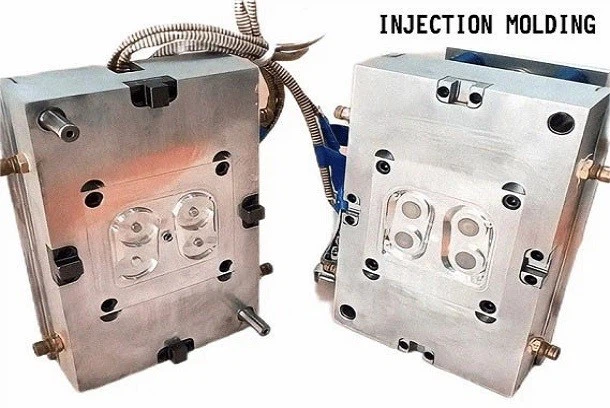
Additive manufacturing is substantially less expensive than conventional production methods like injection molding, for example, which is highly dependent on the volume. For low volume requirements, like let’s say 20 plastic enclosures, 3D printing would be a more cost-efficient option as compared to injection molding. 3D printing eliminates the need to construct a mold to produce your low volume item, which is a huge benefit.
Efficient
You can make many variations, iterations and improvements to a model using 3D printing. Interestingly, the procedure is much quicker compared with the more traditional processes. Additive manufacturing bypasses the process of creating a mold and waiting for the manufacturing process to complete. This method is ideal for rapid iteration and can help speed up the entire design process.
Test-Ready Prototypes
Owing to a range of 3D printing ingredients and online 3D printing platforms, advanced polymers are now commercially available. Various materials have been modified for manufacturing and testing purposes. For testing, these materials can be used to develop enhanced working prototypes by utilizing their exceptional qualities. For example, ABS is the most used 3D printing polymer. It has high strength, is reusable, flexible and shock resistant. However, PLA or polylactic acid is biodegradable and more environmentally friendly than ABS. There's also ASA, which is like ABS, but is more resistant to UV rays. Though it is important to note that in a closed printing chamber, ASA emits styrene, which is harmful to health.
Mold For Vacuum Casting
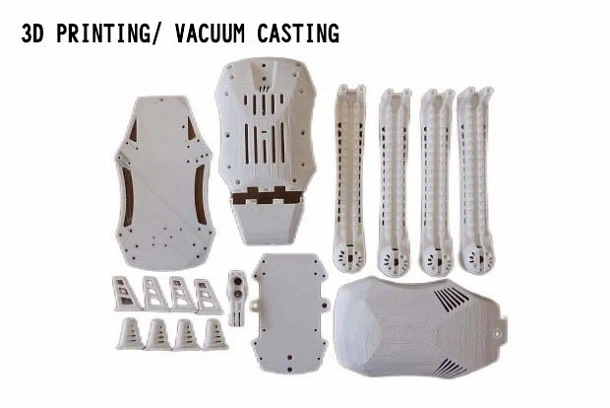
A strong 3D print can be used as a 3D Mold in vacuum casting process making it versatile. Using steel for molds can be expensive especially when production volume is only a couple 100 or less. Making a master mold for vacuum casting using 3D printing is a great alternative to steel mold (machine mold). You can also generate numerous mold copies from a 3D printed master part via vacuum casting. For this, first, 3D print a master part. Then, cast silicone around it in a vacuum chamber, making sure no air bubbles are present. Then precisely cut the mold and take out the master part. You now have a silicone mold cavity to make numerous copies of your piece.
CAD Design File
CAD software originates from the need to solve complicated manual design problems engineers face during technical hand drawing. Users can customize CAD design files to meet exact specifications, produce complex geometries that are impossible to make manually, and quickly create variations for product development.
Slicing Software
The next step in the process is to use slicing software to convert the 3D model into a set of instructions that the 3D printer understands. The slicing software “slices” the 3D model into layers and generates a code that tells the printer where to place each layer and how much material should be used for each layer.
Slicing software is a powerful tool for controlling printing and optimizing print quality. It offers layer-by-layer print previews, customizable supports and rafts, advanced slicing engine settings, 3D model repair tools, and more.
The Printing Process
Once the slicing software has generated the code, it can be sent to the 3D printer for printing. The printer then reads the instructions and starts printing according to the code provided by the slicing software.
During the printing process, a nozzle deposits a layer of plastic or other material onto a print bed in small increments until each layer is complete. It’s essential to use high-quality 3D printers to get the best out of the prototypes. The best 3D printers offer greater precision and accuracy, faster print speeds, better layer adhesion and surface finish, and can accommodate a wider range of materials.
Best 3D Materials for Printing Prototypes

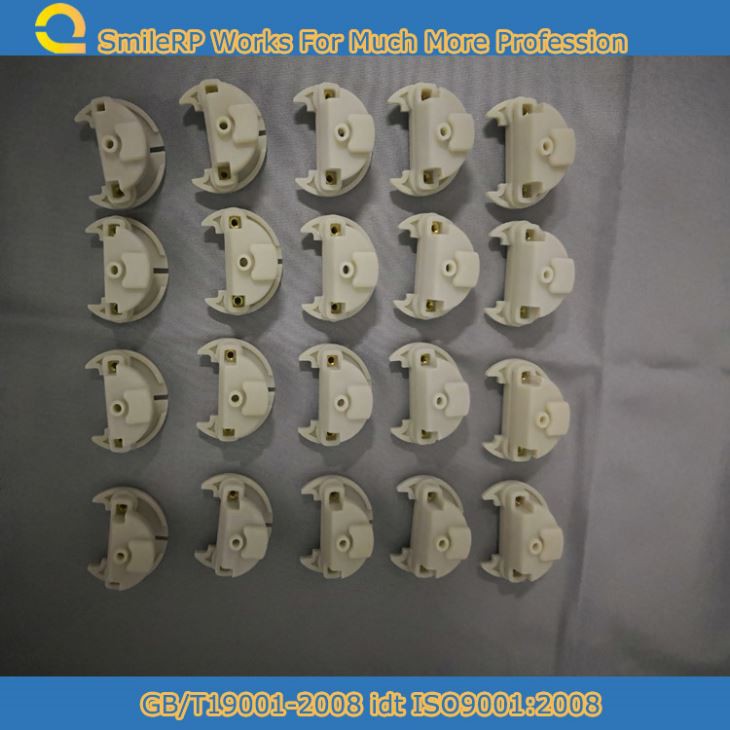


Nylon PA12
This is a white plastic material, and it is among the most affordable materials for prototyping. Despite its relatively cheap cost, Nylon PA12 has excellent mechanical properties. It comes from fine polyamide powder, making it perfect for prototyping and production runs. This 3D printing material works best with Selective Laser Sintering (SLS) technology.
Multi Jet Fusion PA12
This material is a grey plastic, perfect for prototyping and production. The raw version of the Multi Jet Fusion PA12 is the cheapest option on the market. You can easily make changes at low costs. Moreover, using this material gives you abrasion- and scratch-resistant products. This makes them useful for prototype testing. The Multi Jet Fusion PA12 is also stable to weather, UV stabilized, and light stabilized. Therefore, it is a perfect option for testing in outdoor conditions.
Prototyping Resin
This resin is more suitable for non-functional prototypes, and you don’t want to use it for large production runs. Whenever you wish to manufacture highly detailed components, prototyping resin is a perfect choice. It offers smooth surface finishes, similar to products manufactured with plastic injection molding. This material works best with stereolithography (SLA).
PLA
Fused Deposition Modeling (FDM) is an interesting technique, particularly useful for Polylactic acid (PLA) filaments. PLA is a user-friendly material with high stiffness and strength. It has a low printing temperature and minimal warping, making it one of the easiest 3D printing materials. It is also an inexpensive material, creating reliable parts for many different applications. If aesthetics and fine details are a major concern, PLA should be your go-to material.
TPU
If your 3D printing prototyping project requires a flexible plastic, TPU is the perfect solution. This material has the properties of rubber, including high elasticity and high strength. Therefore, it would fit your prototyping project if you need something flexible. Components from this material are resistant to fatigue and stress, and it is also a great choice for final products.
Types of 3D Printing Prototypes
There are many different kinds of prototypes, and the product development process will determine which type will work best.
Visual Prototype:
A visual prototype can illustrate a product's color, size, and geometric features. These simple prototypes may not include the correct texture, feel, or weight of the final product. Visual prototypes are primarily used in marketing.
Working Prototype:
A working prototype allows customers to test functionality. These prototypes may not have the same appearance as the final product. The purpose of the working prototype is to determine if the final product will meet design specifications or if any design changes need to be made. Testing form, fit, and function is a crucial step in product development.
User Experience Prototype:
A user experience prototype has the same appearance and functionality as the final product. It can be presented to the end user for research and allows for consumer testing. This helps determine if a product is user-friendly while providing insights into customer satisfaction. Customers can interact with the prototype, allowing valuable data to be gathered. There may still be opportunities for improvement based on feedback from the user experience prototype.
Functional Prototype:
A functional prototype has the same appearance and full functionality as the final product. It may be made using different materials or manufacturing methods than those used in the final product. Functional prototypes are ideal when seeking funding for mass production or for licensing.
Optimizing Designs for 3D Printing
Designing prototypes for 3D printing requires a unique approach to fully leverage the capabilities of additive manufacturing technologies. Here are some tips for optimizing designs for 3D printing:
Geometry and Support Structures
Design parts with self-supporting geometries whenever possible to minimize the need for support structures. Orient parts to reduce overhangs and decrease printing time and material waste.
01
Wall Thickness and Structural Integrity
Ensure adequate wall thickness to maintain structural integrity and prevent deformation during printing. Consider the mechanical properties of the chosen material and adjust the design accordingly.
02
Surface Finish and Detail
Pay attention to surface finish and detail resolution when designing prototypes for visual or aesthetic purposes. Choose printing parameters that balance print quality with printing time and cost.
03
Material Selection
Select the appropriate 3D printing material based on the desired properties and performance requirements of the prototype. Consider factors such as strength, flexibility, temperature resistance, and post-processing options.
04
Tolerance and Fit
Design parts with proper tolerances and clearances to ensure accurate assembly and functionality. Test the fit of mating components before finalizing the design to avoid issues during assembly or testing.
05
How To Get the Most Value from 3D Printed Prototypes
With all these differences between 3D printed and molded parts, it’s important for a design team to understand these differences, and sometimes to limit expectations of 3D prints. Most of the time, 3D prints still have value, and I want to spend a little bit of time exploring how to get value out of 3D printed prototypes and how to move through the development process quickly using 3D prints for prototypes.
It’s important to note that there are many, many components in products, especially consumer products, where the performance parameters mentioned above are not critical. With these parts, nothing slides, or wears, they’re plenty strong, and the tolerances aren’t critical. These are the parts where we lean heavily on 3D printing without additional risk or analysis. It’s key for designers to identify these parts and use 3D printing as a quick and inexpensive way to get through prototype builds. But almost every product has parts where this isn’t the case, where tolerances, surfaces, or strength matter. So, what should a design team do to move efficiently and learn effectively from prototype builds?
Almost all of the differences between molded and 3D printed parts make the 3D prints “worse.” That means, that if the design is working with the 3D prints, it will have margin in the product. One option is to release the product with extra margin. For friction, extra margin is designing the machine to function with or overpower the 3D print’s high friction. For margin against wear, a design might include large wear surfaces to extend life. For margin against loose tolerances, parts may fit with extra clearance between them. For strength margin, designs may use overbuilt components, extra ribs and more nominal wall thickness in plastic parts. I’m a big fan of adding margin wherever I can. Adding margin to a design is a great way to reduce risks of problems, fight fewer problems in the development cycle, and often makes designs less dependent on fancy materials or specialized processes.
3D Printing Prototypes: A Future Technology Gaining a Foothold
3D printers and 3D printing prototypes are becoming increasingly important topics. No wonder, as this revolutionary technology is gaining a foothold in real life.
The 3D printing process, also known as additive manufacturing, involves producing even complex, three-dimensional objects by successively adding layers.
3D Printing Prototypes: Additive Manufacturing
3D printing prototyping is also referred to as generative manufacturing or rapid technologies. The areas of application are almost limitless, ranging from equipment construction and automation technology in industry to the medical sector, model making, handicrafts, and rapid prototyping in architecture or eyewear production.
In fact, 3D printing prototypes can significantly shorten manufacturing processes and the market launch of new products. Such additive manufacturing processes have been in use since the 1980s. Generative manufacturing for 3D printing prototypes also relied on already known processes such as screen printing.
So much for the historical overview of additive manufacturing. In the following sections, we will take a closer look at new 3D printers, modern 3D printing prototypes, and, above all, the starting materials required for this technology.
3D Printing Prototypes: A New World is Emerging!
It's not just the printer that matters; the so-called filament is also crucial. This filament serves as the basis or starting material for every 3D printing prototype.
The 3D printing filament, from which the prototypes are created, is wound on rolls and heated in the printer during the printing process. There are many different types of filament. The choice of the right material depends on the product to be manufactured, the 3D printed prototype. Among other options, there are plastics such as PLA used in the production of 3D printing prototypes, as well as carbon filament, which is favored by many professional companies. When using carbon filament, it is important to consider that hardened nozzles should be used; normal brass nozzles wear out very quickly due to the abrasive nature of carbon fibers.
Our Factory
Established in 2011 in Shenzhen, China. Smile RP Ltd. (Shenzhen Smile Precision Technology Co limited) is an empowering company that provides precision manufacturing services and comprehensive manufacturing solutions. Since 2013, SMILE has been exporting excellent parts overseas, gradually expanding its customer base worldwide over the past decade.

FAQ
As one of the leading 3d printing prototype manufacturers and suppliers in China, we warmly welcome you to wholesale quality 3d printing prototype made in China from our factory.
professional 3d printing process, large color 3d printing service, PA 3d Printing TechnologyPopular Products


