


Why choose us
One-Stop Solution
We offer one-stop manufacturing solutions covering CNC machining, 3D printing, sheet metal fabrication, mold making, and a wide range of material options and surface treatment solutions, supporting everything from rapid prototyping to on-demand production.
Our Certificate
Our factory management system conforms to GB/T 9001-2015 IDT ISO 9001:2015 standards.
Quality Control and Shipments
We have specialized engineers to examine the quantity, size, assembly, and surface finish. Once they confirm that everything is in order, we will send pictures to our clients for confirmation. After approval, we will arrange international express shipping (DHL, UPS, TNT, EMS, FedEx) with the best packaging.
After-Sale Service
If there are any discrepancies with your requirements, we will refund your money or reproduce the products until you are satisfied, free of charge.
Plastic Rapid Prototyping is a remarkable manufacturing process that has stood the test of time for well over a century. It revolves around the art of melting plastic pellets or resins and injecting them into a specially crafted mold cavity, resulting in the formation of a solid part. What makes injection molding truly impressive is its ability to consistently reproduce parts with exceptional accuracy and precision. It finds application in diverse industries such as automotive, medical, consumer goods, and electronics, just to name a few.
-
![Teflon-ultem-1000-peek-material-cnc-rapid-prototyping]() Teflon-ultem-1000-peek-material-cnc-rapid-prototypingWe are one of the best factories of CNC Rapid Prototyping.. Best Quality,Best Service,Fast Delievery Time and Resonable Price.. Acceptable 3D Drawing File: Step,Stp,X-T,Igs,Dwg.. Delivery Time: 3-7
Teflon-ultem-1000-peek-material-cnc-rapid-prototypingWe are one of the best factories of CNC Rapid Prototyping.. Best Quality,Best Service,Fast Delievery Time and Resonable Price.. Acceptable 3D Drawing File: Step,Stp,X-T,Igs,Dwg.. Delivery Time: 3-7 -
![Computer And Notebook Mouse Plastic Prototype CNC Rapid Prototyping]() Computer And Notebook Mouse Plastic Prototype CNC Rapid PrototypingWe are one of the best factories ofComputer And Notebook Mouse Plastic Prototype CNC Rapid Prototyping.. Best Quality,Best Service,Fast Delievery Time and Resonable Price.. Acceptable 3D Drawing
Computer And Notebook Mouse Plastic Prototype CNC Rapid PrototypingWe are one of the best factories ofComputer And Notebook Mouse Plastic Prototype CNC Rapid Prototyping.. Best Quality,Best Service,Fast Delievery Time and Resonable Price.. Acceptable 3D Drawing -
![NoteBook And Computer Plastic Prototype CNC Rapid Prototyping]() NoteBook And Computer Plastic Prototype CNC Rapid PrototypingWe are one of the best factories of NoteBook And Computer Plastic Prototype CNC Rapid Prototyping.. Best Quality,Best Service,Fast Delievery Time and Resonable Price.. Acceptable 3D Drawing File:
NoteBook And Computer Plastic Prototype CNC Rapid PrototypingWe are one of the best factories of NoteBook And Computer Plastic Prototype CNC Rapid Prototyping.. Best Quality,Best Service,Fast Delievery Time and Resonable Price.. Acceptable 3D Drawing File: -
![Roaster Oven Prototype CNC Rapid Prototyping]() Roaster Oven Prototype CNC Rapid PrototypingWe are one of the best factories of Roaster Oven Prototype CNC Rapid Prototyping.. Best Quality,Best Service,Fast Delievery Time and Resonable Price.. Acceptable 3D Drawing File:
Roaster Oven Prototype CNC Rapid PrototypingWe are one of the best factories of Roaster Oven Prototype CNC Rapid Prototyping.. Best Quality,Best Service,Fast Delievery Time and Resonable Price.. Acceptable 3D Drawing File: -
![Coffee Machine Prototype Model CNC Rapid Prototyping]() Coffee Machine Prototype Model CNC Rapid PrototypingWe are one of the best factories of Coffee Machine Prototype Model CNC Rapid Prototyping.. Best Quality,Best Service,Fast Delievery Time and Resonable Price.. Acceptable 3D Drawing File:
Coffee Machine Prototype Model CNC Rapid PrototypingWe are one of the best factories of Coffee Machine Prototype Model CNC Rapid Prototyping.. Best Quality,Best Service,Fast Delievery Time and Resonable Price.. Acceptable 3D Drawing File: -
![Office Printer Prototype Model CNC Rapid Prototyping]() Office Printer Prototype Model CNC Rapid PrototypingWe are one of the best factories of Office Printer Prototype Model CNC Rapid Prototyping.. Best Quality,Best Service,Fast Delievery Time and Resonable Price.. Acceptable 3D Drawing File:
Office Printer Prototype Model CNC Rapid PrototypingWe are one of the best factories of Office Printer Prototype Model CNC Rapid Prototyping.. Best Quality,Best Service,Fast Delievery Time and Resonable Price.. Acceptable 3D Drawing File: -
![TV Cover Frame Plastic Prototype Model CNC Rapid Prototyping]() TV Cover Frame Plastic Prototype Model CNC Rapid PrototypingWe are one of the best factories of TV Cover Frame Plastic Prototype Model CNC Rapid Prototyping.. Best Quality,Best Service,Fast Delievery Time and Resonable Price.. Acceptable 3D Drawing File:
TV Cover Frame Plastic Prototype Model CNC Rapid PrototypingWe are one of the best factories of TV Cover Frame Plastic Prototype Model CNC Rapid Prototyping.. Best Quality,Best Service,Fast Delievery Time and Resonable Price.. Acceptable 3D Drawing File: -
![Electric Medical Equipment Plastic Prototype CNC Rapid Prototyping]() Electric Medical Equipment Plastic Prototype CNC Rapid PrototypingWe are one of the best factories of Electric Medical Equipment Plastic Prototype CNC Rapid Prototyping.. Best Quality,Best Service,Fast Delievery Time and Resonable Price.. Acceptable 3D Drawing
Electric Medical Equipment Plastic Prototype CNC Rapid PrototypingWe are one of the best factories of Electric Medical Equipment Plastic Prototype CNC Rapid Prototyping.. Best Quality,Best Service,Fast Delievery Time and Resonable Price.. Acceptable 3D Drawing -
![Car Door Prototype Process CNC Rapid Prototyping Plastic Prototype]() Car Door Prototype Process CNC Rapid Prototyping Plastic PrototypeWe are one of the best factories of Car Door Prototype Process CNC Rapid Prototyping Plastic Prototype.. Best Quality,Best Service,Fast Delievery Time and Resonable Price.. Acceptable 3D Drawing
Car Door Prototype Process CNC Rapid Prototyping Plastic PrototypeWe are one of the best factories of Car Door Prototype Process CNC Rapid Prototyping Plastic Prototype.. Best Quality,Best Service,Fast Delievery Time and Resonable Price.. Acceptable 3D Drawing -
![Car Navigation Control Panel Plastic Prototype CNC Rapid Prototyping]() Car Navigation Control Panel Plastic Prototype CNC Rapid PrototypingWe are one of the best factories of Car Navigation Control Panel Plastic Prototype CNC Rapid Prototyping.. Best Quality,Best Service,Fast Delievery Time and Resonable Price.. Acceptable 3D Drawing
Car Navigation Control Panel Plastic Prototype CNC Rapid PrototypingWe are one of the best factories of Car Navigation Control Panel Plastic Prototype CNC Rapid Prototyping.. Best Quality,Best Service,Fast Delievery Time and Resonable Price.. Acceptable 3D Drawing -
![Automobile Engine Cover Rapid Prototype Plastic Prototyping]() Automobile Engine Cover Rapid Prototype Plastic PrototypingWe are one of the best factories of Engine Cover Rapid Prototype Plastic Prototyping.. Best Quality,Best Service,Fast Delievery Time and Resonable Price.. Acceptable 3D Drawing File:
Automobile Engine Cover Rapid Prototype Plastic PrototypingWe are one of the best factories of Engine Cover Rapid Prototype Plastic Prototyping.. Best Quality,Best Service,Fast Delievery Time and Resonable Price.. Acceptable 3D Drawing File: -
![Car Air Outlet Rapid Prototype CNC Prototyping]() Car Air Outlet Rapid Prototype CNC PrototypingWe are one of the best factories of Car Air Outlet Rapid Prototype CNC Prototyping.. Best Quality,Best Service,Fast Delievery Time and Resonable Price.. Acceptable 3D Drawing File:
Car Air Outlet Rapid Prototype CNC PrototypingWe are one of the best factories of Car Air Outlet Rapid Prototype CNC Prototyping.. Best Quality,Best Service,Fast Delievery Time and Resonable Price.. Acceptable 3D Drawing File:


Prototype refers to the 3d date that all the products will be made according to the 3d date. It includes the fireproof ABS rapid plastic prototype, plastic prototyping for exhibition, plastic prototype machine serviced and so on.
Our company is available to provide the prototype since it is made with strict standards which are able to meet the international requirements. It is capable o offering the prototype made in China with superior quality from our factory that you can gain with the competitive price.
Benefits of Plastic Rapid Prototyping
Quick And Reliable Manufacturing: Plastic prototype manufacturing reduces the risk of product failure, which costs time and money. With our rapid injection molding prototyping, you can ensure your product is ready for launch because you can quickly and easily make adjustments to style and functionality.
Increased Design Process Efficiency: Plastic rapid prototyping can help shorten the engineering and design process of creating a specific product. Having physical prototype plastic parts makes it incredibly easy to identify possible changes necessary to meet your exact specifications.
Reduced Cost: Manufacturers who skip prototyping often have to readjust their final product molds, which is incredibly expensive and inefficient. Plastic prototype manufacturing allows you to perfect your product prior to creating the mold for production.
Design Visualization:
Even if you have a fantastic concept in your head, it can be challenging to convey it to others effectively. A practical example, such as a plastic prototype, can bridge that gap.
It allows you to demonstrate your product’s size, shape, and overall appearance, making it easier for stakeholders and potential buyers to understand your idea. Observing your concept come to life can enable you to gather user feedback and make the necessary adjustments.
Functionality and Ergonomics Testing:
While computer simulations and schematics are helpful, they only explain how your product will work in actual situations.
A plastic prototype allows you to physically interact with your design while testing its functionality and assessing usability. You can identify design issues by handling, using, and experimenting with the prototype.
Design Iterations and Quick Prototyping:
Plastic prototypes are ideal for iterative and rapid prototyping. A physical prototype enables you to quickly apply feedback and testing findings. Iterative development cycles reduce time to market and minimize setbacks.
Risk and Cost Reduction:
Creating a plastic prototype before mass production can save you time, effort, and money. Early detection and correction of design flaws can lead to cost savings and decreased product failure.
By using prototypes, you can evaluate various design options, streamline production, and eliminate waste. Investing in a plastic prototype early can reduce costs and enhance product quality.
The Top 4 Types of Plastic Rapid Prototyping


Casting Techniques for Plastic Prototype Manufacturing
Silicone casting is an excellent process for low-batch plastic prototype fabrication since it requires a master model (a sample) to create the molds. You usually suspend the master model over an empty tank. Then, you add some technological elements (usually plastic as well) to the model, such as the channel for pouring plastic and ventilation. After that, you pour liquid silicone into the tank, wait until it solidifies, and sometimes cure it in the oven. You split the mold in half, and it’s ready to produce up to 25 plastic parts. No capital investments are necessary.
How to Use 3D Printing for Plastic Prototyping
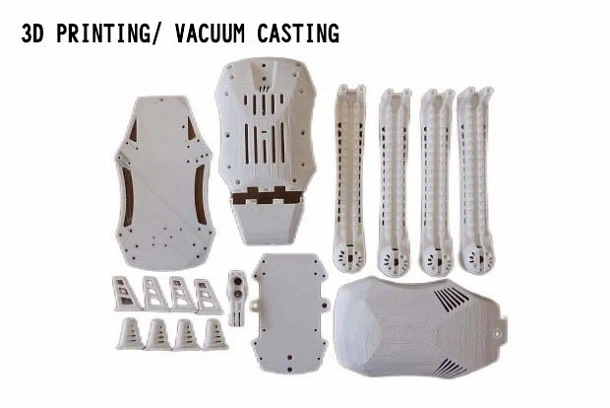
Additive manufacturing, often called 3D printing, is a comparatively innovative process for manufacturing different parts. What defines 3D printing is the change in mass; the initial material is usually larger than the final part. However, in additive manufacturing, the initial material can be either powder or a thin filament. It is applied to the printer's base plate layer by layer and is sintered or cured to replicate the current cross-section of the part. Since its invention in the 1980s, additive manufacturing has made significant strides in precision, surface finish, material choice, and lead time.
Selective Laser Sintering (SLS)
Selective laser sintering is one of the earliest processes among the various additive manufacturing techniques used for rapid plastic prototyping. It is the most versatile type of additive process that can be used for practically any material, including plastics. SLS does not require a lot of laser power to sinter materials together, and the main advantage of spreading powder over the base plate is that it serves as a support structure for overhanging elements to some degree.
Fused Deposition Modeling (FDM)
FDM is the cheapest and easiest additive process available for manufacturing plastic prototypes. Many hobbyists create FDM 3D printers at home. FDM uses raw material in the form of a plastic filament that is liquefied and deposited layer by layer on the plate, forming the current cross-section of the part. Overhanging structures are supported using another material—a more brittle type of plastic that can be easily removed. Overall, FDM is the most economical process but yields the poorest surface finish and quality, requiring more post-processing if aesthetics are important.
Stereolithography (SLA)
SLA is considered the "father" of all 3D printing processes and is known for producing the highest part quality. The surface finish is almost perfect, and precision is limited only by the diameter of the UV/laser light. This process is widely used to manufacture master models for future casting and prototypes where aesthetics are crucial. However, SLA is the most expensive process since the liquid polymer is costly, and a considerable amount is required. Another issue with SLA is that support structures can only be made using the model material and must be mechanically removed, which can leave blemishes on the surface that require post-processing.
MultiJet Printing (MJP)
MultiJet printing is a popular choice for prototypes made of plastic, as it combines many advantages of FDM while lacking some disadvantages of SLA. In MJP, raw plastic is melted into droplets and dispensed from the printer nozzle in the required contours. One of the main advantages of MJP is that the quality of the parts is similar to that of SLA, but it does not require filling a tank with liquid polymer. MJP is also the only multicolor process among those mentioned.
How to Create a Plastic Prototype with Rapid Injection Molding
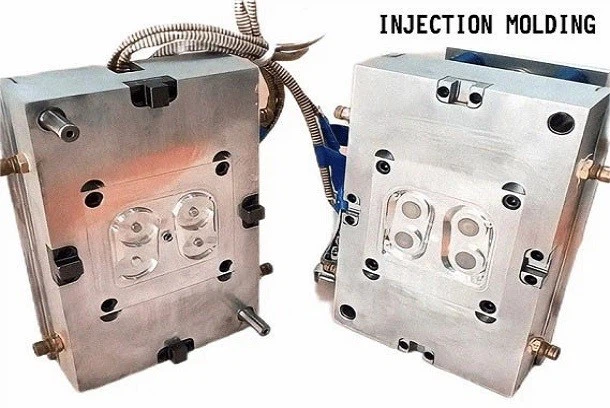
Rapid plastic injection molding is a variation of conventional injection mold manufacturing technology. The main difference lies in the details; for example, rapid molds have more joints. The cavity of the mold is connected to the base, so if you need to modify the design, you can simply remove the cavity and change it without altering any other elements. This lowers accuracy but increases flexibility. Additionally, instead of hardened steel, which is suitable for millions of iterations, aluminum alloys are used. While they are less durable, their manufacturability is up to five times better. These modifications make it possible to use plastic injection molding even for prototypes. However, it is advisable to use this method for high-quality work, as the process is still relatively costly.
Using CNC Machining to Create Plastic Parts
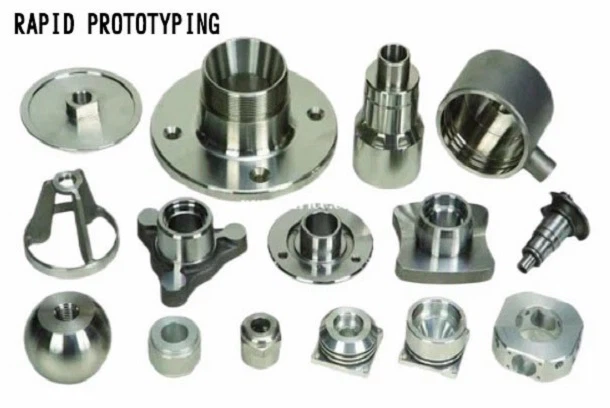
When it comes to machined plastic and metal components, many plastic prototype manufacturers use CNC machining for form, fit, and functional testing of plastic parts due to its advantages in the prototyping realm. With the upgrade in production-grade material selection that machining provides, we use CNC prototyping to create plastic prototypes and metal parts. This allows your design team to closely simulate the final product's appearance and function, reflecting the validity of assembly work and providing the time and space needed to modify and optimize the design.
Materials Used in Plastic Rapid Prototyping
Thermoplastics
The most common material used in plastic prototypes to create the best kinds of prototype plastic parts is thermoplastics. This variety of plastic is available in solid form, mostly in the form of colored pipes that can be melted and molded. Thermoplastics are mostly plastic polymers that can melt down in elevated temperatures and, at the same time, can be cooled easily to form a shape.
Thermoplastics are appreciated for their versatility and their ability to be recycled for reuse. Thermoplastics are very commonly used in plastic prototype manufacturing processes. They are melted and injected into pre-made molds to produce efficient and fully functional parts.
Resins
Extracted from nature, resins comprise synthetic compounds and can be used in several manufacturing processes. Resins are flexible synthetic materials that can be converted to solid or liquid form and mixed with chemicals to harden or soften them. Mostly, resins are used with molds for creating home decor items, jewelry pieces, coasters, furniture tops, and various plastic parts.
Elastomers
Known for their viscosity and elasticity, elastomers are polymers generally of a rubbery texture. Elastomers get their names from elasticity; they can be stretched and regained in shape. Synthetic elastomers, often made of petroleum, come into various industrial use, such as manufacturing over-molded parts. Apart from elasticity, elastomers are also known for their resistance.
Applications Of Plastic Rapid Prototyping
The applications of rapid plastic prototyping are vast and varied. EBM's solutions enable companies to explore numerous fields including:
Product Design and Development: Rapid plastic prototyping allows designers to iterate their ideas quickly, test functionality, and gain valuable feedback. It expedites the design cycle, leading to improved product performance and reduced time to market.
Medical Device Innovation: Rapid prototyping plays a crucial role in developing medical devices, allowing for precise customization, efficient testing, and regulatory compliance. EBM's plastic prototyping techniques aid the creation of surgical instruments, prosthetics, anatomical models, and medical equipment.
Automotive and Aerospace Industries: Prototyping with plastic offers the automotive and aerospace sectors opportunities to optimize designs, improve aerodynamics, and reduce weight. EBM's techniques support the fabrication of accurate car parts, airplane components, and model structures for wind tunnel testing.
Consumer Product Sampling: Rapid prototyping with plastic facilitates the creation of visual models that simulate the final product, enabling companies to receive feedback from potential customers, investors, and stakeholders before committing to mass production. This helps minimize manufacturing errors and enhances market acceptance.
Educational and Research Purposes: Plastic prototyping technologies are valuable tools for educational institutions and researchers. They allow students and scholars to materialize their theoretical concepts into reality, fostering innovation and advancement in various scientific disciplines.
5 Tips for Successful Plastic Rapid Prototyping
A part’s behavior can vary depending on the type of plastic being worked on—machining nylon is different from machining acrylic or other plastics. Each type has unique properties (some may be softer while others may be more brittle) and different heat thresholds. These characteristics call for varying machining techniques, tooling selection, and machining parameters.
Rigidity is critical when machining plastic parts to avoid part deflection and excessive vibration during the machining process. There are various ways to secure your workholding jigs and fixtures, including adding ridges to your clamping mechanism, using the appropriate size of collets, and designing a broader surface area engagement of the part with the fixture.
Tooling selection is essential in machining plastics because the geometry and material of the tools directly affect heat generation. Here are some general points to consider:
1.Uncoated carbide tools perform better with plastic materials.
2.Use polished tools; dull bits tend to generate a considerable amount of heat.
3.Choose cutting tools with maximized chip evacuation clearance to minimize heat produced during cutting. Use drills with twist angles of 12 to 18 degrees.
Like tooling geometry, the machining parameters significantly affect plastic part machining. Feed rates depend on the stiffness of the material stock. For example, it is advisable to use a slower spindle speed but a faster feed rate for plastics like acrylic. This helps avoid poor surface finishes and excessive burrs by preventing the material from gumming up.
Additionally, plastics cannot withstand as much pressure as metals. Therefore, when milling, avoid aggressive depths of cut. When drilling, lift the drill often to help chips evacuate the hole (a technique known as peck drilling).
There are various ways to finish a plastic surface, with buffing being the most common mechanical method. Buffing uses an abrasive medium to polish the surface of the plastic. To achieve the smoothest finish, machinists typically buff the part starting with coarse material and progressing to the finest abrasive, such as polishing compounds. Other polishing techniques may include flame polishing, vapor polishing, and optical machining.
What Are the Stages of Plastic Rapid Prototyping?
To demystify the process, it’s crucial to break down the main stages involved in rapid injection molding. Each phase plays a vital role in ensuring the final product meets the specified requirements with precision:
Design and Prototyping: Initially, a detailed design of the part is created using CAD software. This stage is critical for identifying and incorporating essential design features such as wall thickness, surface finish, and material selection. Rapid prototyping techniques like 3D printing may be used to create a physical prototype for evaluation and testing.
Mold Making: Once the design is finalized, the production of the mold begins. Aluminum molds are commonly used due to their cost-effectiveness and shorter lead times compared to traditional steel molds. CNC machining and electrical discharge machining (EDM) are techniques employed to craft these molds with high accuracy.
Material Selection: Selecting the appropriate resin material is crucial for the project. Factors such as the part’s end use, mechanical properties, and aesthetic requirements guide this selection process. Engineering resins, ABS, polypropylene, and polycarbonate are among the polymers often chosen for their durability and performance.
Injection Molding Process: The selected material is melted and injected into the mold cavity under high pressure using an injection molding machine. This phase is meticulously monitored to ensure optimal molding conditions and achieve the desired quality.
Cooling and Ejection: After injection, the part cools and solidifies within the mold. Cooling channels within the mold help manage the cooling rate for even solidification. Once cooled, the part is ejected from the mold, marking the completion of the molding cycle.
Post-Processing: Depending on the part design and application, post-processing steps such as drilling, painting, or assembly may be necessary. These additional processes refine the part’s appearance, enhance its properties, or prepare it for its final application.
Quality Assurance: Each part undergoes a thorough inspection to ensure it meets the required specifications and quality standards. Measurements and tests are conducted to assess the part’s dimensions, material properties, and overall integrity.
Iteration if Necessary: Rapid injection molding allows for quick iterations based on feedback or testing results. Design modifications can be efficiently implemented, demonstrating the process’s flexibility in adapting to specific needs.
Our Factory
Established in 2011 in Shenzhen, China. Smile RP Ltd. (Shenzhen Smile Precision Technology Co limited) is an empowering company that provides precision manufacturing services and comprehensive manufacturing solutions. Since 2013, SMILE has been exporting excellent parts overseas, gradually expanding its customer base worldwide over the past decade.

FAQ
As one of the leading plastic rapid prototyping manufacturers and suppliers in China, we warmly welcome you to wholesale quality plastic rapid prototyping made in China from our factory.
Disposable Medical Mask For TradePopular Products


