


Why choose us
One-Stop Solution
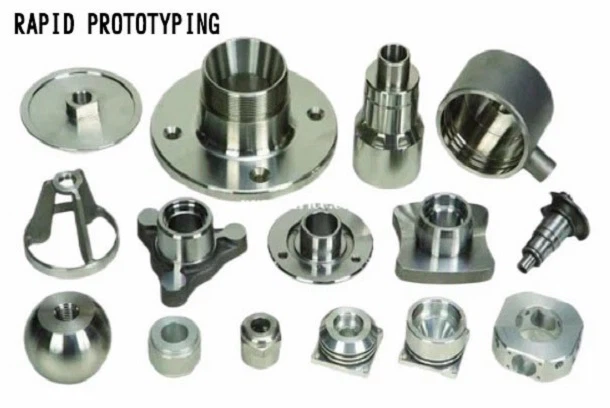
We offer one-stop manufacturing solutions covering CNC machining, 3D printing, sheet metal fabrication, mold making, and a wide range of material options and surface treatment solutions, supporting everything from rapid prototyping to on-demand production.
Our Certificate
Our factory management system conforms to GB/T 9001-2015 IDT ISO 9001:2015 standards.
Quality Control and Shipments
We have specialized engineers to examine the quantity, size, assembly, and surface finish. Once they confirm that everything is in order, we will send pictures to our clients for confirmation. After approval, we will arrange international express shipping (DHL, UPS, TNT, EMS, FedEx) with the best packaging.
After-Sale Service
If there are any discrepancies with your requirements, we will refund your money or reproduce the products until you are satisfied, free of charge.
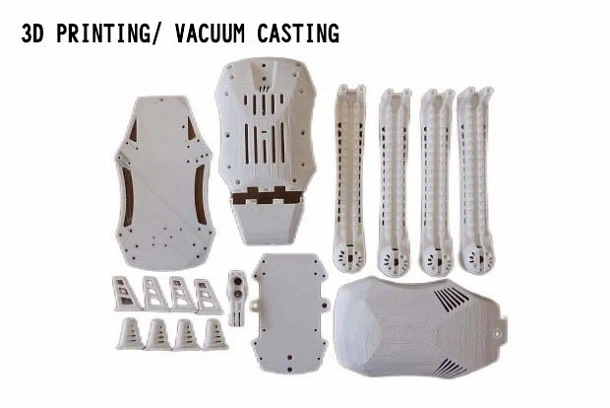
Polyurethane vacuum casting, also called vacuum casting, is a cost-effective substitute for small-batch plastic injection molding that allows for close replication of the final molded part or finished product. Typically, molds are made of silicone rubber, and CNC or SLA parts serve as master molds.
-
![Machinery Parts CNC Milling Service]() Machinery Parts CNC Milling Servicewe are one of the best factories of CNC Machining CNC Milling CNC Turning.. High Precision,Best Quality,Best Service,Fast Delievery time and Resonable Price.. Acceptable 3D Drawing File:
Machinery Parts CNC Milling Servicewe are one of the best factories of CNC Machining CNC Milling CNC Turning.. High Precision,Best Quality,Best Service,Fast Delievery time and Resonable Price.. Acceptable 3D Drawing File: -
![Aluminum Auto Wheels 5 Axis CNC Mill]() Aluminum Auto Wheels 5 Axis CNC Millwe are one of the best factories of CNC Machining CNC Milling CNC Turning.. High Precision,Best Quality,Best Service,Fast Delievery time and Resonable Price.. Acceptable 3D Drawing File:
Aluminum Auto Wheels 5 Axis CNC Millwe are one of the best factories of CNC Machining CNC Milling CNC Turning.. High Precision,Best Quality,Best Service,Fast Delievery time and Resonable Price.. Acceptable 3D Drawing File: -
![CNC Lathe Aluminum Prototype Service]() CNC Lathe Aluminum Prototype Servicewe are one of the best factories of CNC Machining CNC Milling CNC Turning.. High Precision,Best Quality,Best Service,Fast Delievery time and Resonable Price.. Acceptable 3D Drawing File:
CNC Lathe Aluminum Prototype Servicewe are one of the best factories of CNC Machining CNC Milling CNC Turning.. High Precision,Best Quality,Best Service,Fast Delievery time and Resonable Price.. Acceptable 3D Drawing File: -
![Aluminum CNC Lathe With Sandblast And Anodized]() Aluminum CNC Lathe With Sandblast And Anodizedwe are one of the best factories of CNC Machining CNC Milling CNC Turning.. High Precision,Best Quality,Best Service,Fast Delievery time and Resonable Price.. Acceptable 3D Drawing File:
Aluminum CNC Lathe With Sandblast And Anodizedwe are one of the best factories of CNC Machining CNC Milling CNC Turning.. High Precision,Best Quality,Best Service,Fast Delievery time and Resonable Price.. Acceptable 3D Drawing File: -
![Aluminum And Steel Prototype Machined Parts]() Aluminum And Steel Prototype Machined Partswe are one of the best factories fo CNC Machining CNC Milling CNC Turning.. High Precision,Best Quality,Best Service,Fast Delievery time and Resonable Price.. Acceptable 3D Drawing File:
Aluminum And Steel Prototype Machined Partswe are one of the best factories fo CNC Machining CNC Milling CNC Turning.. High Precision,Best Quality,Best Service,Fast Delievery time and Resonable Price.. Acceptable 3D Drawing File:


CNC lathes are one of the most widely used CNC machine tools. It is mainly used for the inner and outer cylindrical surfaces of shaft parts or disc parts, the inner and outer conical surfaces of any taper angle, the complex inner and outer curved surfaces, the cylindrical and conical threads, etc., and can be used for grooving, drilling, reaming and reaming,etc.
The lathe has high degree of automation, which is able to reduce labor intensity. And it has high processing precision, and has stable processing quality. When the machining parts are changed, it can save production preparation time that it generally only needs to change the numerical control program. With the scientific and ergonomic design, it is convenient to use with the simple operation.
Our company is one of the reliable manufacturers and suppliers of CNC lathe in China that the CNC lathe is produced with strict standards to make sure the stable operation with superior quality. It is available to buy the products made in China from our factory.
- The mold is complex but excellent with good mold effect;
High mold frequency and long mold life after vacuum mould casting;
Flame resistance and high temperature resistance, especially for unsaturated resin handicrafts and glass resin handicrafts;
The shrinkage rate is low, and the silicone mold will not be deformed;
High tear strength, not easy to tear during demolding.
How does the vacuum casting process work?
The vacuum casting production process is relatively manual and includes several steps.
Master Pattern Manufacturing: The master pattern is usually manufactured by SLA 3D printing or CNC machining. The choice of method depends on the properties and shape of the part to be produced.
Creation Of The Silicone Mold: The master pattern is used to create the imprint in the silicone mold, which will be used to duplicate the parts in the selected material and color. It is also possible to create different types of surfaces by polishing the mold impressions.
Material Preparation And Vacuum Casting: The polyurethane material will be prepared and dyed in the selected color if necessary. Then the silicone mold is placed in the vacuum casting machine and the material is injected into it.
Demolding And Solidification: Once the part is cast, the silicone mold is removed and the part is demolded manually. The piece is then put in the oven (a few minutes to a few hours depending on the size of the piece) and the casting operation is repeated several times.
Polishing And Application Of Finishes: During this last step the piece will be deburred and hand finished, before applying the desired finishes (polishing, painting, marking etc.)
The silicone mold can be reused to duplicate 10 to 20 parts, allowing for economies of scale and producing a number of parts in a short period of time.
How Does Vacuum Casting Work?
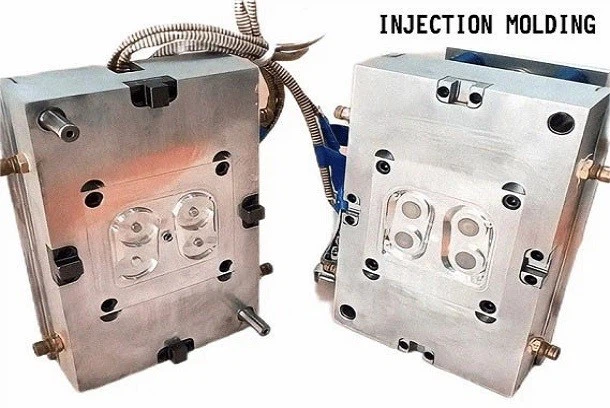
Vacuum casting, like conventional injection moulding, needs a mould tool with a cavity shaped like the finished object. In contrast to injection moulding, vacuum casting uses silicone moulds rather than hard metal ones.


Step 1: Create a 3D Model
As with most contemporary manufacturing processes, the first step is to create a 3D model of the desired form. To get the best results, objects intended for vacuum casting should be made following injection moulding principles.
Step 2: Create a Master Pattern
The 3D model is then used to draft a high quality master model. Previously, CNC machining was used to make them, but now additive manufacturing can do the job quickly. With the advent of 3D printing technology, the pattern maker’s role has become more practical and affordable. On the other hand, a cast model that can serve as the master pattern can be utilised without any further modification.
Step 3: Make The Silicone Mould
Following the development of the master pattern, a mould is cast. The master pattern, complete with casting cores, inserts, and gates, is hung in a casting box. The formed way is placed in a vacuum casting box, and liquid silicone is poured around it, filling in all the details. This is then put into a preheated oven at 40°C for 8-16 hours to cure. Timing is subject to variation based on the dimensions of the silicone mould.
The box and the risers come out after the silicone has dried and set. To finish, the negative form cavity of the component is exposed by delicately splitting the mould with a knife. Stickiness and surface flaws can be avoided with careful selection and application of the mould-release agent.
Step 4: Mixing
Before mixing, polyurethane resins used for casting are typically heated to about 40°C. To use the machine, a two-component casting resin and any desired colourant are combined in precise quantities and poured into a bowl. The mould is then placed back in place, and the pouring gates are attached to the mixing and pouring vessel.
Vacuum casting resins and colour pigments are thoroughly mixed and deaerated for 50-60 seconds in a vacuum during the auto-pouring process. Next, a vacuum is created in the mould, and the resin is poured inside. By eliminating the air pockets inside the tool, which would otherwise act as an obstacle to flow, vacuum technology makes it possible for gravity to do all the work in filling the mould.
Step 5: Demoulding The Parts
After the resin has been poured into the mould, it is heated in a curing room until hard. Casting can be taken out of the mould when it has hardened. When the casting is complete, the gate and risers can be removed, and any last finishes performed.
Guidelines for Effective Design in Vacuum Casting
These guidelines will help you critically modify features during the design phase and create accurate vacuum casting products.
Wall Thickness
Vacuum casting allows us the ability to include different wall thicknesses in a single part. To ensure structural integrity and achieve the optimum outcomes, it is best to keep wall thickness consistent and suggest 1.5mm thick.
Tolerances
Tolerance design ensures your parts fit together and fulfill the required standards. A 0.15% shrinkage occurs during silicone mold casting. Consequently, it is important to consider this shrinkage when making parts.
Ribs
For large flat sections, in particular, adding ribs increases strength and decreases warping. Also, note that to stop the ribs from shrinking and sinking, their thickness must be smaller than that of the nearby walls. Rib thickness should ideally be a minimum of 60% of the nominal wall thickness.
Bosses
Bosses are frequently used for designing housings or casings. At attachment locations, they increase strength. They should be at least 1 mm in height and diameter. It is also important to make sure that their wall thickness does not go above 60% of the nominal part thickness to reduce the chance of them sinking.
Undercuts
Vacuum casting undercuts do not require inserts and can be designed freely, in contrast to methods that call for hard tooling.
Embossed Details
To maintain clarity and visibility, texts and logos that are embossed (raised) or debossed (recessed) should have a minimum depth or height of 1 mm and a minimum width of 1 mm. To improve readability, keep a 1mm space between characters as well.
Vacuum casting is one of the most cost-effective ways to produce high-quality, low-volume plastic parts that can be similar to injection-molded parts. The parts are especially suitable for form, fit, and function tests during the embodiment design stages, where they can be used for marketing, field user testing, and product design verification purposes.
There are many urethane casting resins commercially available that can be used to create parts that satisfy a wide range of design requirements, such as temperature specifications, different surface textures, and hardness levels. Materials are also available to create parts that are fully opaque, translucent, or completely transparent.
Additionally, high-quality wax masters can be made using vacuum casting for investment casting, enhancing the finer details of intricate features.
Vacuum Casting Material Selection
ABS is commonly employed in vacuum casting. It offers a good balance of properties and is easy to process due to its low melt viscosity. It displays good toughness, rigidity, and impact strength. ABS has good dimensional stability, meaning that parts made from it will not warp or distort over time. In addition, it exhibits excellent chemical resistance and can be used in various applications. ABS is an ideal choice for vacuum casting because of its combination of properties and ease of processing.
PU8150, ABS-like
PU8150 is a common material due to its excellent abrasion and wear resistance, making it useful in many settings. It is durable and resistant to oil and chemicals, making it an excellent fit for industrial applications.
PU8260, ABS-like
PU8260 is a polyurethane elastomer with high tear strength and resistance to abrasion. It is hydrolytically stable and has a low compression set. This product is primarily used in vacuum casting and has a transparent or light-yellow tint.
PU8263, ABS-like
PU8263 has excellent strength, thermal stability, and abrasion resistance. It is primarily used for producing high-strength components via vacuum casting. This product is a resin that has been partially oxidized, with a high crosslinking density that helps it maintain its shape.
PX100, ABS-like
PX100 is a common material for rapid prototyping due to its toughness, durability, and impact resistance. It is composed of isocyanate and polyol and takes on a milky white appearance when combined.
PX215, ABS-like
PX215 is a blend of ABS and unreinforced polycarbonate. Strong durability and dimensional consistency are two of its key benefits. It has been UV-stabilized for increased durability in adverse conditions and is most often used in injection molding and vacuum casting.
UP4280, ABS-like
UP4280 requires the use of polyol and UP4280-2 (ISOCYANATE) for processing. It has no inherent color but adopts the color of the polyol it is combined with, resulting in colors like off-white (C/2), black (K/2), or pale beige (N/2).
Polycarbonate (PC) is a durable, lightweight plastic with a wide range of applications. One of the most popular uses for PC is in vacuum casting, where molten plastic is injected into a mold under vacuum pressure. This process produces vacuum cast parts with very accurate dimensions and a high degree of detail.
PC is ideal because it has excellent dimensional stability and can be easily molded into complex shapes. Additionally, PC parts are solid and durable, making them suitable for applications requiring strength and durability.
PU8098, PC-like
PU8098 is created by mixing Polyol (A) and Isocyanate (B) in a ratio of 100 (A) to 250 (B). The material can be demolded in one hour and has high impact strength.
PX510, PC-like
PX510 possesses several beneficial qualities comparable to those of thermoplastic polymers.
UP6160, PC-like
UP6160 resin has a viscosity of 200-300 MPa and is a combination of Polyol and Isocyanate.
PX223HT, PC-ABS-like
PX223HT urethane is often used in vacuum casting processes. It is available only in black and has no color gradations. Products made from this material exhibit excellent impact resistance and are easy to cast due to its low viscosity.
PMMA, also known as acrylic, is a transparent plastic often used in vacuum casting. This material is strong and shatter-resistant, making it ideal for applications requiring transparency.
PX5210HT, PMMA / Acrylic-like
PX5210HT is created by combining UPX5210 POLYOL, UPX5210 ISOCYANATE, and UPX5210-S POLYOL. It has a high viscosity of 500-650 MPa and can withstand temperatures up to 105°C.
UPX5210, PMMA / Acrylic-like
UPX5210 is a transparent anti-UV urethane resin primarily used for casting in silicone molds. Parts with wall thicknesses up to 50 mm can be produced with this material. It is resistant to UV radiation.
X522HT, PMMA / Acrylic-like
X522HT is a translucent urethane resin designed for producing high-end transparent items. It can be cast in a silicone mold using the vacuum casting process and is an excellent option for greenhouses as it allows for light passage and acts as an effective heat barrier.
Polypropylene (PP) is a thermoplastic polymer used in various applications. It is distinguished by its high resistance to heat and chemical damage.
PU8570, PP-like
PU8570 consists of three components, created by combining two polyols and one isocyanate in a ratio of (Polyol 1 + Polyol 2): Isocyanate. This material is suitable for producing large components and has a long service life.
UP5690, PP-like
UP5690 is created from Polyol, UP5690 Isocyanate, and UP5690 C. It is a polyurethane resin that can be vacuum cast, often used to make components with PP/HDPE-like qualities. The mechanical properties will vary based on the proportions of the materials used in its production.
Rubber Grade Materials
Rubber is a versatile material used in various applications. It is frequently used in vacuum casting because it can be easily molded into complex shapes and has a high degree of flexibility.
Additionally, rubber is relatively inexpensive and can be reused multiple times. Thus, vacuum casting with rubber is an efficient and cost-effective way to create high-quality parts and products.
UPX8400, Rubber-like
UPX8400 is a polyurethane material made up of three components specifically designed for vacuum casting. This product exhibits a very high elongation and is easy to work with. The mechanical characteristics are determined by the proportions of the three components used.
T0387, Rubber-like
T0387 is a translucent polyurethane elastomer developed for vacuum casting applications. It has a pot life of approximately 5 minutes and 30 seconds. Despite its apparent transparency, the overall mechanical properties are influenced by the proportions of its three components (1 polyol, 1 isocyanate, and 1 polyol).
Our Factory
Established in 2011 in Shenzhen, China. Smile RP Ltd. (Shenzhen Smile Precision Technology Co limited) is an empowering company that provides precision manufacturing services and comprehensive manufacturing solutions. Since 2013, SMILE has been exporting excellent parts overseas, gradually expanding its customer base worldwide over the past decade.

FAQ
As one of the leading metal products cnc lathe manufacturers and suppliers in China, we warmly welcome you to wholesale quality metal products cnc lathe made in China from our factory.
Aluminum And Steel Prototype Machined Parts, aluminum 5 axis cnc machining, CNC Lathe Aluminum Prototype ServicePopular Products


