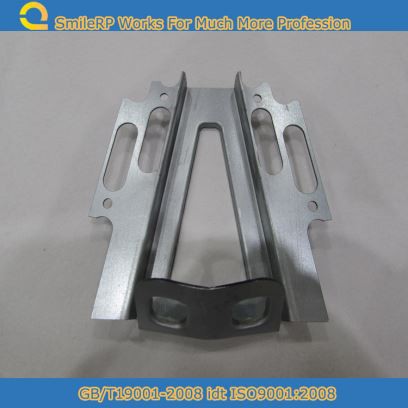
What is the bending angle adjustment method of an aluminum sheet metal bender?
As a trusted supplier of Aluminum Sheet Metal Benders, I am often asked about the bending angle adjustment methods for these essential machines. In this blog, I will delve into the various techniques and considerations for accurately adjusting the bending angle of an aluminum sheet metal bender.
Understanding the Basics of Aluminum Sheet Metal Bending
Before we discuss the adjustment methods, it's crucial to understand the fundamentals of aluminum sheet metal bending. Aluminum is a popular choice in the sheet metal industry due to its lightweight, corrosion - resistant, and malleable properties. When bending aluminum sheets, the goal is to achieve a precise angle without causing cracks, wrinkles, or other defects.
The bending process involves applying force to the aluminum sheet at a specific point to deform it into the desired shape. The bending angle is determined by the amount of force applied, the position of the bending tool, and the properties of the aluminum sheet itself, such as its thickness and hardness.
Manual Adjustment Methods
- Using the Bending Die and Punch
One of the most common manual adjustment methods is through the use of the bending die and punch. The die is the lower part of the bending tool that supports the sheet metal, while the punch is the upper part that applies the force to bend the sheet.
To adjust the bending angle, you can change the shape and size of the die and punch. For example, using a die with a smaller radius will result in a sharper bending angle, while a larger - radius die will produce a more gradual bend. You can also adjust the clearance between the die and the punch. A smaller clearance will increase the bending force and may result in a smaller bending angle, while a larger clearance will reduce the force and may lead to a larger bending angle. - Adjusting the Backgauge
The backgauge is a crucial component of the sheet metal bender that determines the position of the sheet metal during the bending process. By adjusting the backgauge, you can control the length of the bent part and, to some extent, the bending angle.
If you move the backgauge closer to the bending line, the sheet metal will have less material to bend, resulting in a smaller bending angle. Conversely, moving the backgauge further away from the bending line will allow more material to be bent, potentially increasing the bending angle. However, this method is more effective for controlling the overall shape of the bent part rather than achieving highly precise bending angles.
CNC - Controlled Adjustment Methods
- Programming the Bending Angle
In modern aluminum sheet metal benders, Computer Numerical Control (CNC) technology has revolutionized the bending process. With CNC - controlled benders, you can program the desired bending angle directly into the machine's control system.
The CNC system uses a series of sensors and actuators to accurately position the bending tools and apply the appropriate amount of force to achieve the programmed angle. This method offers high precision and repeatability, making it ideal for mass - production applications.
To program the bending angle, you need to input the relevant parameters, such as the sheet metal thickness, material type, and the desired angle. The CNC system will then calculate the optimal bending force and tool position based on these parameters. - Real - Time Monitoring and Adjustment
CNC - controlled benders also allow for real - time monitoring and adjustment of the bending process. Sensors installed on the machine can measure the actual bending angle during the process and compare it with the programmed angle.
If there is a deviation between the actual and programmed angles, the CNC system can automatically adjust the bending force or tool position to correct the angle. This ensures that each bent part meets the required specifications, even if there are slight variations in the material properties or other factors.
Factors Affecting Bending Angle Adjustment
- Material Properties
The properties of the aluminum sheet, such as its thickness, hardness, and alloy composition, can significantly affect the bending angle adjustment. Thicker sheets generally require more force to bend and may be more difficult to achieve precise angles. Harder alloys may also require higher bending forces and may be more prone to cracking during the bending process. - Tool Wear
The wear of the bending tools, including the die and punch, can also impact the bending angle. As the tools wear over time, their shape and size may change, resulting in inaccurate bending angles. Regular inspection and maintenance of the tools are essential to ensure consistent bending quality. - Machine Calibration
Proper calibration of the aluminum sheet metal bender is crucial for accurate bending angle adjustment. Over time, the machine's components may become misaligned or lose their accuracy. Regular calibration can help to ensure that the machine is operating within the specified tolerances and that the bending angles are consistent.
Applications of Precise Bending Angle Adjustment
- Automotive Industry
In the automotive industry, precise bending angle adjustment is essential for manufacturing various components, such as body panels, brackets, and frames. Accurate bending angles ensure a proper fit and alignment of these components, which is crucial for the overall safety and performance of the vehicle. - Electronics Industry
The electronics industry also relies on precise bending of aluminum sheet metal for the production of enclosures, heat sinks, and other components. Precise bending angles are necessary to ensure proper assembly and functionality of these electronic devices. - Aerospace Industry
In the aerospace industry, where safety and reliability are of utmost importance, precise bending angle adjustment is critical. Components such as aircraft wings, fuselage parts, and engine mounts require highly accurate bending to meet the strict design specifications.
If you are in need of high - quality Aluminum Sheet Metal Benders or are looking for more information on bending angle adjustment, we are here to help. Our products are designed to provide precise and reliable bending performance, and our team of experts can offer you professional advice and support. Whether you are a small - scale manufacturer or a large - scale industrial enterprise, we can provide customized solutions to meet your specific needs.
For more information on our related services, you can visit the following links:
Sheet Metal Stamping Products
Iron Sheet Metal Punch Service
Copper Sheet Metal Process Service


If you are interested in purchasing our Aluminum Sheet Metal Benders or discussing your specific requirements, please feel free to contact us for a detailed discussion and negotiation.
References
- "Sheet Metal Forming Handbook" by J. Datsko
- "Aluminum Alloys: Structure and Properties" by G. E. Totten and D. Scott MacKenzie
- "CNC Machining: Programming, Operations, and Process" by John A. Reha