


Using metal or alloy as anode, oxide film is formed on the surface of metal or alloy by electrolysis. Metal oxide films change the surface state and properties, such as surface coloring, improving corrosion resistance, enhancing wear resistance and hardness, protecting metal surface, etc. There are a lot of micropores in the thin layer of oxide film, which can adsorb various kinds of lubricant, which is suitable for manufacturing engine cylinder or other wear-resistant parts. Non-ferrous metals or their alloys (such as magnesium, aluminum and their alloys) can be anodized. This method is widely used in mechanical parts, aircraft and automobile parts, precision instruments and radio equipment, daily necessities and architectural decoration.
Anodizing treatment:
1.protection
2. decoration
3. insulation
4. increase adhesion to organic coating
5. increase adhesion to organic coating, etc.
The difference between anodizing and conductive oxidation:
1. anodizing is carried out under high piezoelectric conditions, it is an electrochemical reaction process; conductive oxidation (also known as chemical oxidation) do not need to be electrified, but only need to soak in the liquid, it is a pure chemical reaction.
2. Anodizing takes a long time, often tens of minutes, while conductive oxidation takes only a few seconds.
3. 3 the films formed by anodizing have several microns to dozens of microns, and are hard and wear-resistant, while the films produced by conductive oxidation are only 0.01 μ m to 0.15 μ m. Wear resistance is not very good, but both conductive and atmospheric corrosion resistance, which is its advantage.
4. the oxide film is not conductive originally, but because the film produced by conductive oxidation is very thin, so it is conductive.
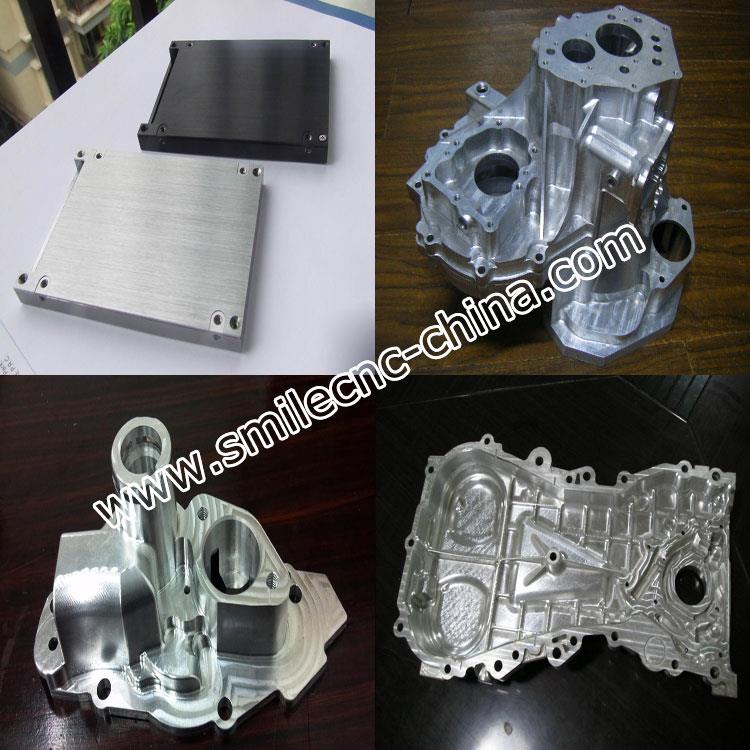
If you want to know more about aluminum cnc milling machining and high precision cnc mill service. please email below. steven@smilecnc-china.com (our sales manager)


