


During the processing of parts, due to various reasons, the size of the parts processed and manufactured cannot be the same as the size in the part drawing design. The degree of deviation between the actual geometric parameters and the ideal geometric parameters is part processing error.
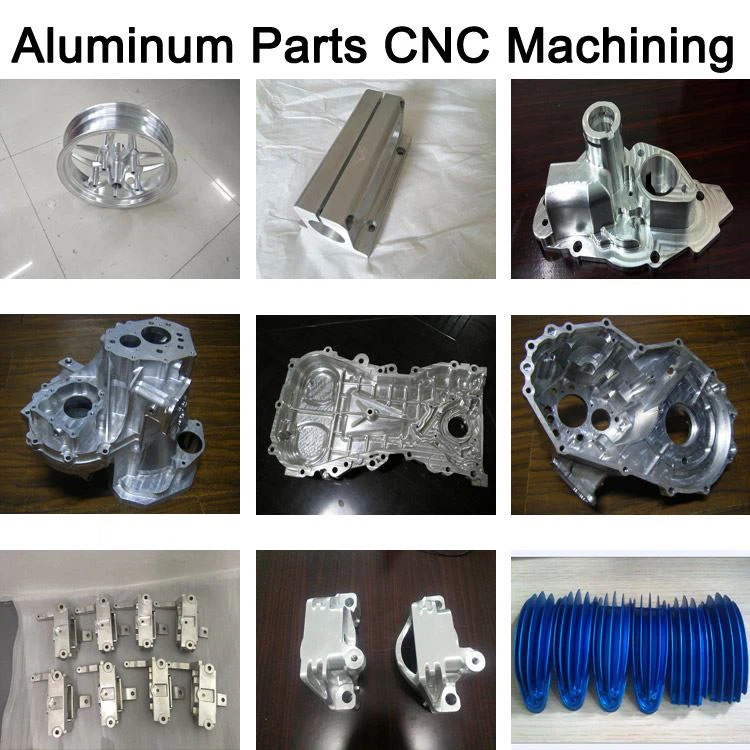
And tolerance is the allowable variation of the actual parameter values of the parts in mechanical design and manufacturing. The larger the allowable range of variation and the wider the tolerance, the greater the acceptable machining error, and vice versa.
The reasons for deviations in parts produced by different manufacturing processes vary. Taking machining as an example, the main reasons for errors are as follows:
Manufacturing accuracy of 01 machine tool
The manufacturing errors of machine tools mainly include spindle rotation errors, guide rail errors, and transmission chain errors.
Spindle rotation error refers to the variation of the actual rotation axis of the spindle relative to its average rotation axis at each instant, which directly affects the accuracy of the workpiece being processed. The main reasons for spindle rotation errors include the coaxiality error of the spindle, the error of the bearings themselves, the coaxiality error between bearings, and the spindle winding.
The guide rail is the benchmark for determining the relative position relationship of various machine tool components on a machine tool, and it is also the benchmark for machine tool movement. The manufacturing error of the guide rail itself, uneven wear of the guide rail, and installation quality are important factors that cause guide rail errors.
Transmission chain error refers to the relative motion error between the transmission components at the beginning and end of the transmission chain. It is caused by manufacturing and assembly errors in various components of the transmission chain, as well as wear and tear during use.
02 Geometric error of the tool
Tool wear is inevitable during the cutting process, which can affect machining accuracy. The impact of different types of cutting tools on machining errors varies.
03 Geometric error of fixture
The function of a fixture is to ensure that the workpiece is in the correct position of the tool and machine tool, so the geometric error of the fixture has a significant impact on mechanical processing errors (especially positional errors).
04 Positioning error
Positioning errors mainly include benchmark misalignment errors and inaccurate manufacturing errors of positioning pairs.
When machining a workpiece on a machine tool, it is necessary to select several geometric features on the workpiece as the positioning reference for processing. If the selected positioning reference does not coincide with the design reference (which is used to determine the size and position of a certain surface on the part drawing), it will result in a benchmark misalignment error.
The workpiece positioning surface and fixture positioning components together form a positioning pair. The maximum positional variation of the workpiece caused by inaccurate manufacturing of the positioning pair and the fit gap between the positioning pairs is called the inaccurate manufacturing error of the positioning pair. The inaccurate manufacturing error of the positioning pair will only occur when using the adjustment method for processing, and will not occur in the trial cutting method for processing.
Error caused by force deformation of the 05 process system
Workpiece stiffness: If the workpiece stiffness in the process system is relatively low compared to the machine tool, cutting tool, and fixture, the deformation caused by insufficient stiffness of the workpiece under the action of cutting force has a greater impact on mechanical processing errors.
Tool stiffness: The stiffness of the cylindrical turning tool in the normal (y) direction of the machining surface is large, and its deformation can be ignored. Boring inner holes with smaller diameters results in poor stiffness of the tool bar, and the deformation of the tool bar under force has a significant impact on the machining accuracy of the hole.
Machine tool component stiffness: Machine tool components are composed of many components, and there is currently no suitable simple calculation method for the stiffness of machine tool components. Currently, experimental methods are mainly used to measure the stiffness of machine tool components.
The factors that affect the stiffness of machine tool components include the influence of contact deformation on the joint surface, the influence of friction force, the influence of low stiffness parts, and the influence of clearance.
Errors caused by thermal deformation of the 06 process system
The thermal deformation of the process system has a significant impact on machining errors, especially in precision machining and large part machining. Sometimes, the machining errors caused by thermal deformation can account for 50% of the total error of the workpiece.
07 Adjustment error
In every process of mechanical processing, it is necessary to make adjustments to the process system in one way or another. Due to the impossibility of absolute accuracy in adjustment, adjustment errors arise. In the process system, the mutual position accuracy of the workpiece and tool on the machine tool is ensured by adjusting the machine tool, tool, fixture, or workpiece.
When the original accuracy of machine tools, cutting tools, fixtures, and workpiece blanks meets the process requirements without considering dynamic factors, adjustment errors play a decisive role in mechanical processing errors.
08 Measurement error
When measuring parts during or after processing, measurement accuracy is directly affected by measurement methods, measuring tool accuracy, workpiece and subjective and objective factors.
09 Internal stress
The stress that exists inside a part without external force is called internal stress. Once internal stress is generated on the workpiece, it will cause the workpiece metal to be in an unstable state at a high energy level. It instinctively needs to transition to a stable state at a low energy level, accompanied by deformation, thereby causing the workpiece to lose its original machining accuracy.


